
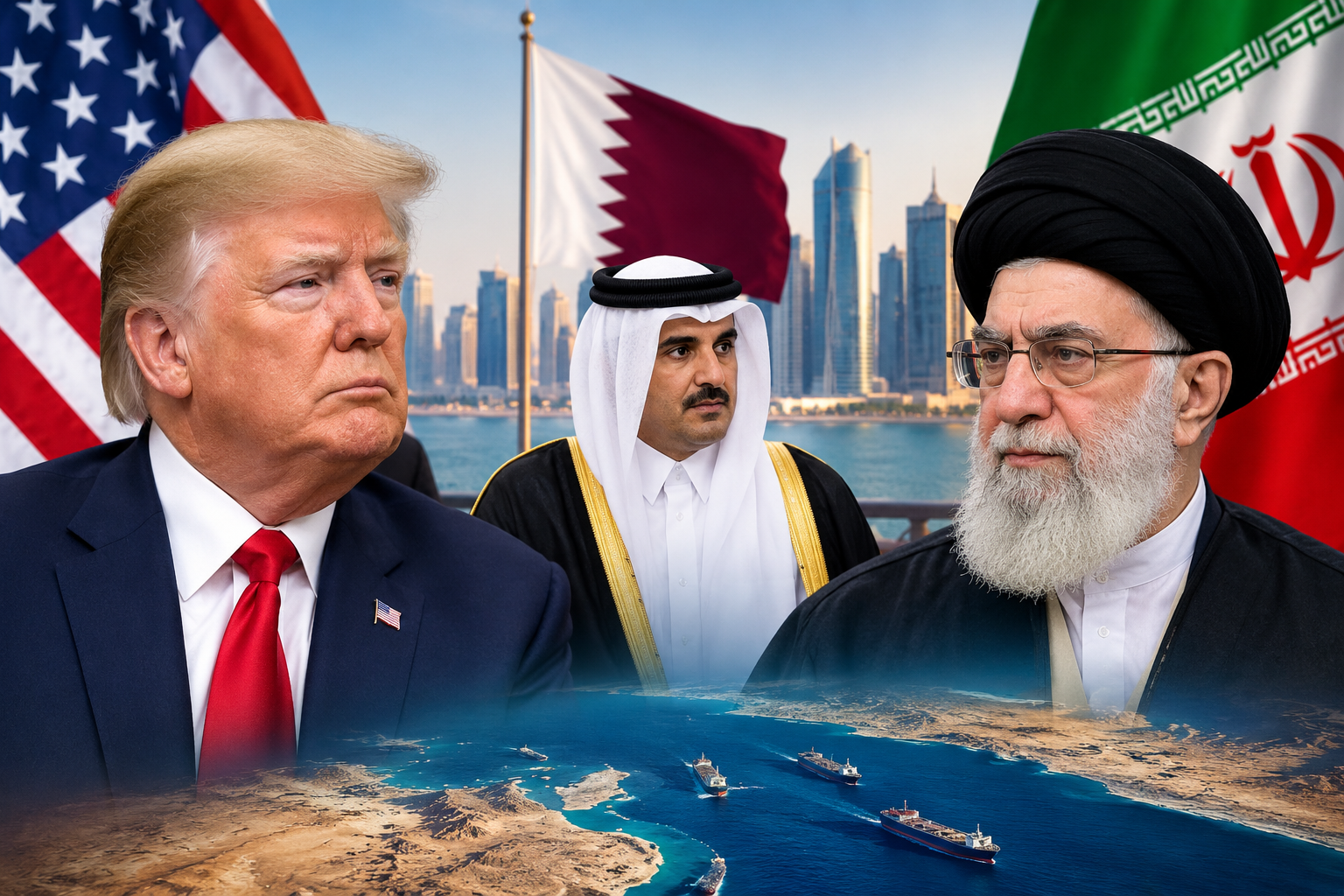
New York — September 29, 2026: U.S. President Donald Trump has said the United States and Iran are continuing discussions as Qatar works to mediate between the two sides, raising the possibility of renewed diplomacy aimed at reducing tensions and reaching an agreement on the conflict and the reopening of the Strait of Hormuz.
The latest diplomatic contacts come after Iran presented proposals focused on reopening the strategic waterway and returning to broader negotiations. Iranian Foreign Minister Abbas Araghchi has held discussions with mediators in New York, while Qatari officials have continued efforts to bridge differences between Washington and Tehran.
Trump has maintained that Washington remains open to negotiations, although he has also rejected Iran’s latest proposal as insufficient. On Tuesday, Trump denied reports that he had offered Tehran sanctions relief and access to frozen Iranian funds in exchange for progress on its nuclear programme, saying he had offered Iran “nothing.”
Qatar’s Role in US-Iran Talks
Qatar has emerged as an important intermediary in the latest diplomatic efforts. Qatar’s Foreign Ministry said on September 22 that Doha was working with Pakistan to de-escalate tensions between Iran and the United States, protect freedom of navigation through the Strait of Hormuz and promote regional stability.
Qatari officials have also held meetings with Iranian leaders and officials during the United Nations General Assembly in New York. Qatar’s Prime Minister and Foreign Minister Sheikh Mohammed bin Abdulrahman Al Thani met Iranian President Masoud Pezeshkian on September 25 to discuss regional developments and efforts to create conditions for dialogue.
Strait of Hormuz Central to Negotiations
The Strait of Hormuz has become one of the central issues in the diplomatic discussions. Iran has proposed reopening the waterway under certain conditions, while negotiations also involve U.S. sanctions, blockades and questions surrounding Iran’s nuclear programme.
The waterway is strategically important for international energy supplies, making any disruption a concern for global markets. Recent uncertainty surrounding the conflict has contributed to higher oil prices and increased concerns about energy security.
Major Differences Remain
Despite continued diplomatic contacts, significant disagreements remain. Washington is seeking assurances regarding Iran’s nuclear activities, while Tehran has linked progress on the Strait of Hormuz and broader negotiations to changes in U.S. pressure and sanctions.
The Associated Press reported that mediators are working on proposals that could involve reopening the Strait of Hormuz and allowing nuclear inspections, but major obstacles remain between the two sides.
For now, the discussions remain indirect, with Qatar and other mediators carrying messages between Washington and Tehran. Further negotiations could determine whether the latest diplomatic efforts develop into a broader agreement or another temporary attempt to reduce tensions.
produced by Mukarram Ahmed
