

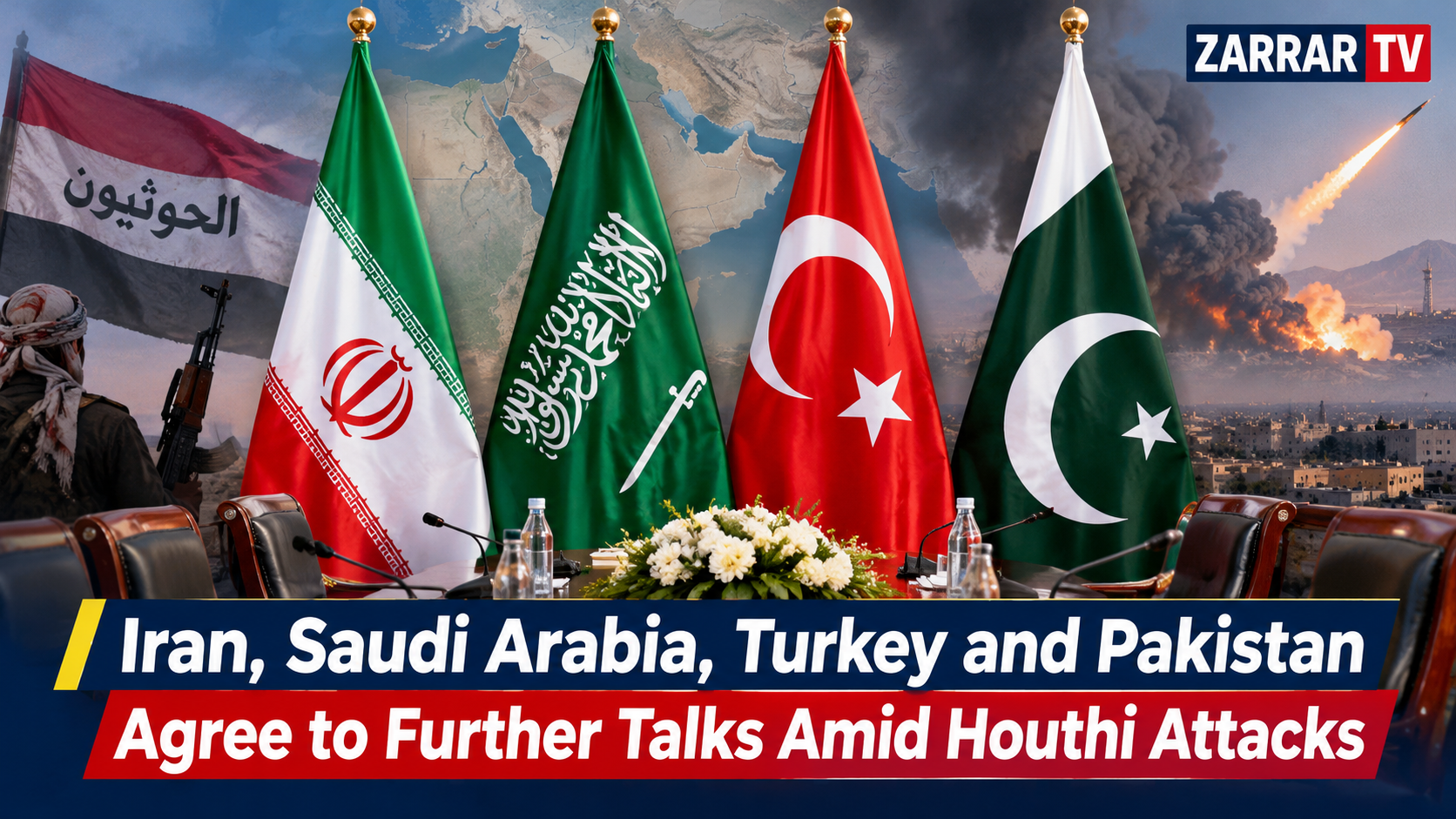
Iran, Saudi Arabia, Turkey and Pakistan have agreed to continue discussions on regional peace and security following high-level talks in Tehran on October 26, 2026, as renewed attacks by Yemen’s Iran-aligned Houthi movement on Saudi targets increase concerns about a wider Middle East conflict. The meeting aimed to strengthen regional cooperation and prevent further military escalation.
According to reporting by Reuters and Arab News, the discussions brought together senior officials from the four countries amid continuing tensions involving Iran, Israel, the United States and Yemen. The agreement to continue dialogue marked a diplomatic development, although officials did not announce a specific date for the next meeting or a new joint security mechanism.
Senior Officials Meet in Tehran
Saudi Arabia was represented by Defence Minister Prince Khalid bin Salman, while Pakistan sent Chief of Army Staff Field Marshal Asim Munir. Turkey was represented by intelligence chief Ibrahim Kalin. The meeting was hosted by Mohsen Rezaei, secretary of Iran’s Supreme National Security Council.
Iranian President Masoud Pezeshkian also met the visiting delegations. The discussions focused on regional stability, security cooperation and efforts to reduce tensions as the conflict continues to affect several countries across the Middle East.
A joint statement said the participants had agreed to continue dialogue to strengthen cooperation among the four countries, particularly on regional peace and security. However, the statement did not outline specific measures for ending the fighting or preventing further attacks.
Houthi Attacks Increase Regional Security Concerns
The diplomatic initiative comes as Yemen’s Houthi movement has intensified attacks on Saudi targets, including reported strikes involving Riyadh’s airport and energy infrastructure. The developments have raised concerns about the security of civilian facilities, regional trade and oil supplies.
Saudi Arabia has faced growing pressure to protect its territory as the wider conflict spreads beyond its original areas of confrontation. The Houthi attacks have added another security challenge for regional governments already concerned about the possibility of renewed fighting between Iran and the United States and Israel.
The Houthis are an armed movement that controls significant parts of Yemen. The group has maintained close ties with Iran, although the extent of Tehran’s control over its decisions remains a subject of debate. The latest developments underline the difficulty of containing conflicts involving multiple state and non-state actors.
Pakistan, Saudi Arabia and Turkey’s Defence Cooperation
The Tehran meeting also brought Iran into direct discussions with the three countries that signed the Mecca Joint Defence Agreement in August 2026: Pakistan, Saudi Arabia and Turkey.
The agreement provides for collective defence cooperation, treating an armed attack against one member as an attack against all three, according to its published terms. Pakistan’s involvement in the latest talks is significant because Islamabad has sought diplomatic engagement with Tehran while maintaining close security ties with Riyadh and Ankara.
The four-country discussions could provide an opportunity to address regional security concerns through direct communication. Nevertheless, the meeting does not mean that Iran has joined the three-country defence agreement, and no such development was announced.
Impact on Oil Markets and Regional Trade
The continuing conflict has also created uncertainty for international energy markets. Saudi Arabia is a major oil producer, while the Strait of Hormuz remains a critical route for global energy shipments.
Reuters reported on October 27 that oil prices edged higher as markets weighed hopes for diplomatic progress against concerns over renewed Houthi attacks and possible supply disruptions. Further escalation could affect shipping costs, energy prices and economies that depend heavily on imported fuel.
For Pakistan, regional instability presents additional economic risks because higher international oil prices can increase import costs and place pressure on domestic prices and foreign exchange reserves.
What Happens Next?
The immediate challenge for Iran, Saudi Arabia, Turkey and Pakistan is to turn their agreement to continue dialogue into practical steps that reduce the risk of further conflict. The timing and location of the next round of talks had not been announced by October 27.
The effectiveness of the diplomatic initiative will depend on whether the countries can sustain communication, address security concerns and support measures that prevent attacks on civilian and economic infrastructure.
For now, the Tehran meeting represents a renewed diplomatic effort rather than a confirmed breakthrough. With Houthi attacks continuing and broader regional tensions unresolved, the coming days will be important in determining whether dialogue can help contain the crisis.
produced by mukarram ahmed
