

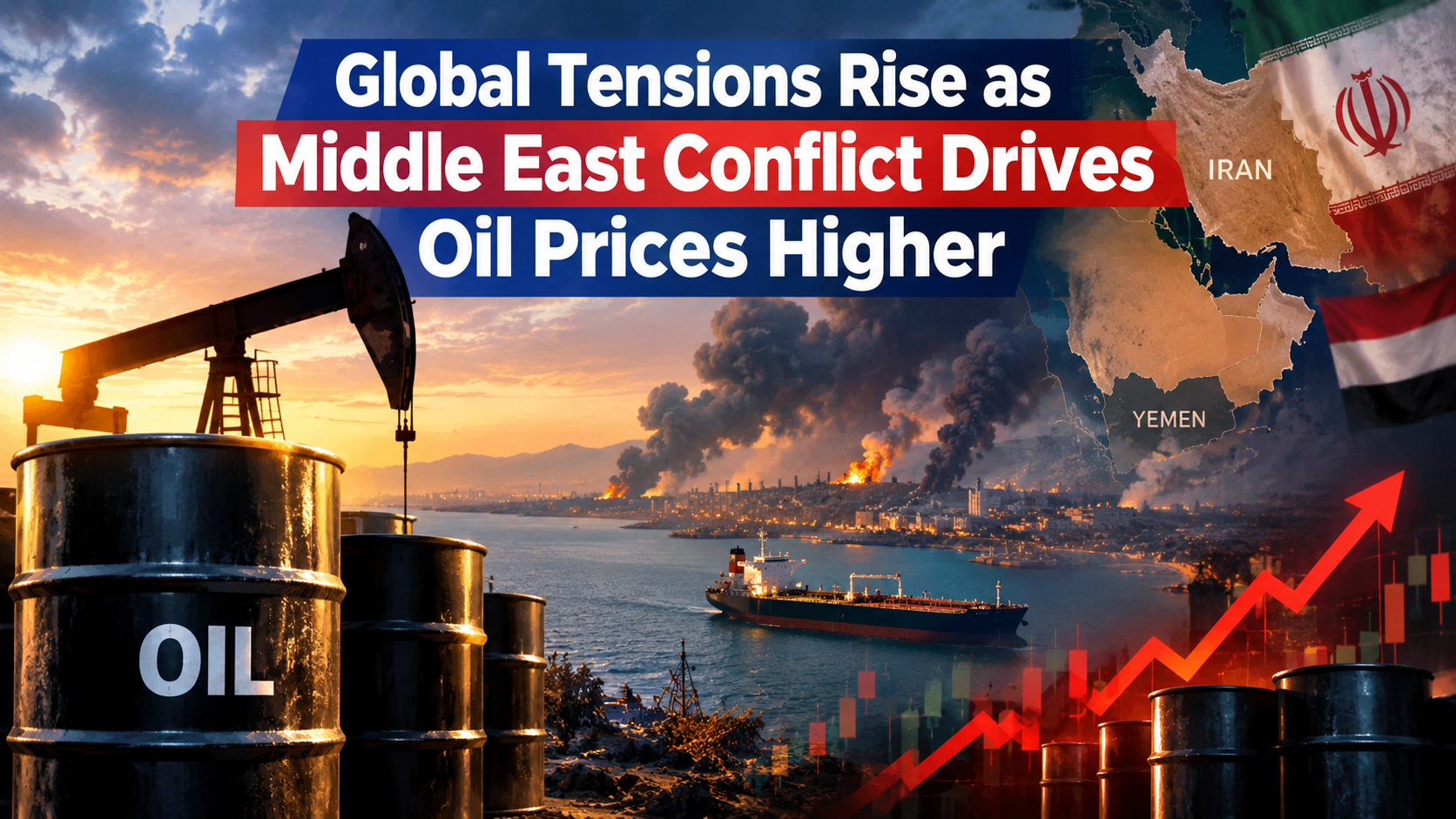
October 7, 2026Global tensions are putting renewed pressure on energy markets as escalating conflict in the Middle East raises concerns about oil supplies and shipping routes. Brent crude moved above $100 a barrel on Wednesday, while traders assessed risks from attacks in the region and possible disruptions to energy infrastructure.
Oil prices have remained highly sensitive to developments involving Iran, Yemen and major Gulf producers. Brent crude rose to around $101.80 a barrel, while U.S. West Texas Intermediate (WTI) crude climbed to about $89.90, according to Reuters.
Middle East Supply Risks
The latest increase comes as fighting involving Yemen’s Iran-backed Houthi movement adds another layer of uncertainty for global energy markets. The Houthis launched missile and drone attacks around Aden on Wednesday, while the wider conflict has increased concerns over the security of the Bab el-Mandeb Strait, an important route for international energy shipments.
The situation is complicated by the fact that Middle Eastern oil exports have recently recovered. Reuters reported that roughly 12 million barrels per day of crude and about 2 million barrels per day of refined products had been shipped from the region over a recent seven-to-10-day period.
That recovery has prevented an even sharper supply shock, but investors remain concerned that renewed attacks could disrupt production, refining or transportation.
Global Markets Under Pressure
The impact extends beyond crude oil. Diesel prices have also risen sharply as disruptions to refining and transportation tighten fuel markets. Reuters reported that diesel futures recently traded at a significant premium to Brent crude, highlighting concerns about shortages in refined products.
Governments are responding to the pressure on energy markets. The Group of Seven has agreed on plans involving the release of emergency crude and diesel reserves, while the International Energy Agency is preparing to discuss further action to support fuel supplies.
Economic Impact
Sustained high oil prices could increase transportation and production costs globally, adding to inflationary pressures for households and businesses. Countries that rely heavily on imported energy could face higher fuel bills and increased pressure on their economies.
The risk is particularly significant if shipping disruptions become more widespread. Oil executives have warned that depleted global inventories leave the market with less protection against additional supply shocks.
What’s Next
Markets are likely to remain focused on developments involving Iran, Yemen, Saudi Arabia and key maritime routes in the Middle East. Any further disruption to oil production or shipping could push prices higher, while a sustained improvement in regional exports and a reduction in military tensions could ease some of the pressure.
For now, the combination of geopolitical uncertainty, fragile inventories and elevated shipping risks is keeping global oil markets highly volatile.
produced by mukarram ahmed
