

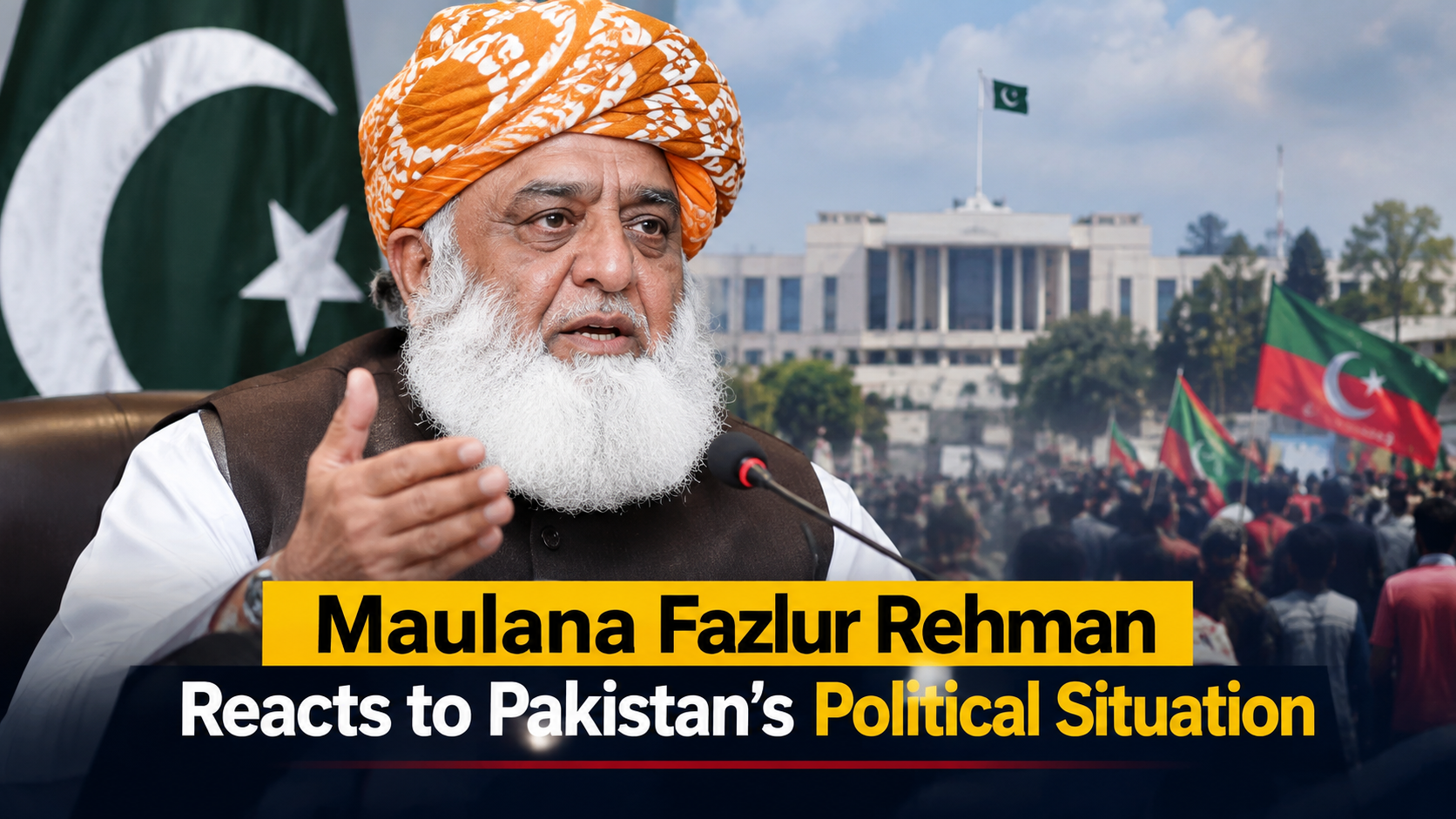
ISLAMABAD, October 7, 2026 — Jamiat Ulema-e-Islam-Fazl (JUI-F) chief Maulana Fazlur Rehman has called for political dialogue and broader consultation to address Pakistan’s growing political tensions, while supporting the right to peaceful protest and opposing emergency measures in Khyber Pakhtunkhwa.
Fazlur Rehman made the remarks after meeting opposition leaders at his residence in Islamabad, where the participants discussed the country’s political situation, negotiations with the government and the possibility of convening an All-Parties Conference (APC).
The JUI-F chief said democratic and political forces believed in negotiations, but expressed concern that the government’s approach had reduced the space for meaningful political dialogue. He argued that negotiations require both sides to listen to each other, make compromises and pursue political solutions.
The meeting came as tensions remained high over the Pakistan Tehreek-e-Insaf (PTI) long march toward Islamabad. Fazlur Rehman said peaceful protests and long marches were legitimate democratic rights and that the government should not obstruct a peaceful political activity.
He also urged the authorities to trust PTI’s stated intention to keep its protest peaceful. The remarks came amid heightened security measures aimed at preventing protesters from entering the federal capital.
Call for All-Parties Conference
Fazlur Rehman and opposition representatives also discussed the proposal for an All-Parties Conference aimed at developing a broader political agenda.
The proposed consultation could bring political parties together to discuss issues affecting the country, including political stability, law and order, the economy, inflation, the regional situation and other national concerns. Opposition representatives have argued that a consensus-based approach could help reduce political tensions.
The JUI-F leader has also rejected proposals for imposing governor’s rule or an emergency in Khyber Pakhtunkhwa, saying such measures would not address the underlying political and security problems facing the province.
Political Situation in Pakistan
The latest developments come as Pakistan faces renewed political tensions following the breakdown of talks between the government and PTI. PTI supporters began a march toward Islamabad earlier this week, with the party demanding the release of former Prime Minister Imran Khan and raising other political and constitutional issues.
The government has taken security measures around Islamabad, while PTI leaders have continued to press ahead with their political campaign.
Fazlur Rehman’s latest comments place greater emphasis on dialogue, consultation and political engagement rather than confrontation. His support for peaceful protest, alongside his call for negotiations, reflects an attempt to keep political channels open amid the current tensions.
What Comes Next
The proposed All-Parties Conference could provide an opportunity for opposition parties to develop a common position on major national issues. At the same time, the government and PTI face pressure to find a political route out of the current confrontation.
Whether renewed dialogue can begin will depend on the willingness of the major political parties to engage with one another and find areas of agreement.
produced by mukarram ahmed
