

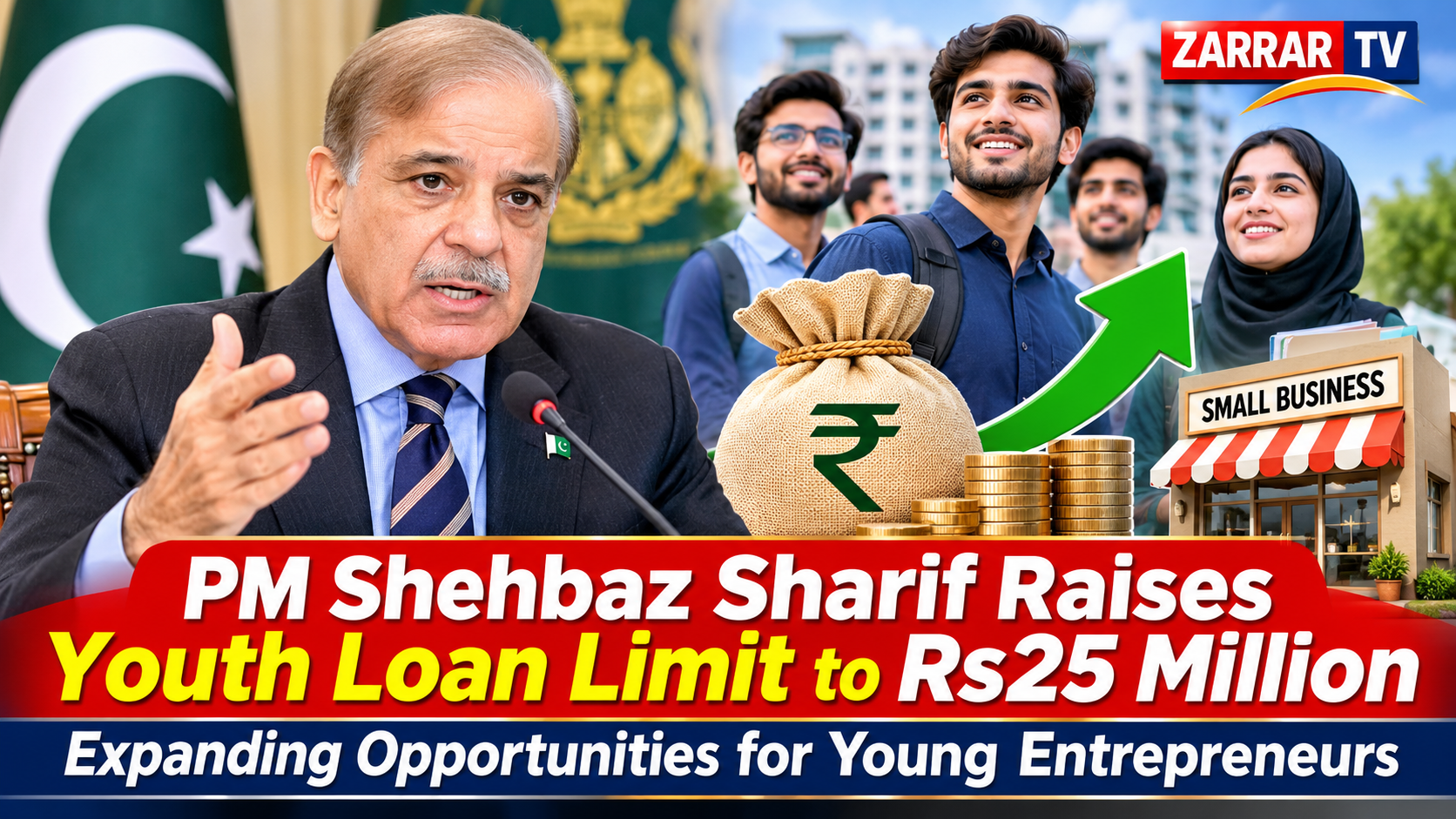
ISLAMABAD, Pakistan — November 9, 2026: Prime Minister Shehbaz Sharif has increased the maximum loan limit under the Prime Minister’s Youth Business and Agriculture Loan Schemes from Rs7.5 million to Rs25 million, while reducing the minimum eligibility age from 21 to 18 years. The decision aims to expand access to financing for young entrepreneurs, farmers and aspiring business owners across Pakistan.
The announcement was made during a high-level meeting chaired by the prime minister to review the progress and implementation of the government’s youth business and agriculture financing programmes.
Under the revised directions, eligible young people will be able to seek larger loans to establish new businesses, expand existing enterprises and undertake agricultural projects. The prime minister also directed authorities to provide loans through easy instalments to facilitate young applicants.
Minimum Loan Eligibility Age Reduced to 18 Years
One of the significant changes announced by the prime minister is the reduction of the minimum age requirement for loan applicants from 21 to 18 years.
The decision is intended to give younger Pakistanis an opportunity to enter the business sector and participate in economic activities at an earlier stage of their lives.
Previously, applicants had to be at least 21 years old to qualify under the relevant youth financing arrangements. By lowering the age threshold, the government aims to bring more young people into the formal business and agricultural sectors.
The revised age requirement could be particularly relevant for young graduates, skilled individuals and aspiring entrepreneurs who have business ideas but lack sufficient financial resources to turn them into viable enterprises.
30 Percent of Youth Loans Reserved for Women
Prime Minister Shehbaz Sharif has also directed the authorities to allocate 30 percent of loans under the Youth Business and Agriculture Loan Schemes to women.
The measure is intended to strengthen women’s economic independence and encourage their participation in entrepreneurship, business development and agricultural activities.
Access to financing remains an important consideration for women seeking to establish independent businesses or expand existing ventures. The proposed allocation could create additional opportunities for women entrepreneurs, particularly those who face difficulties securing investment through conventional financing channels.
The government has emphasised the importance of increasing women’s participation in productive economic activities through targeted financial support.
Rs292 Billion Allocated for Youth Financing in 2026-27
According to the briefing presented during the meeting, the government has allocated Rs292 billion for youth financing under the schemes during the 2026-27 financial year.
Officials informed the meeting that approximately 266,700 young people are expected to benefit from the financing programmes during the current fiscal year.
The briefing also highlighted the programme’s previous performance. Since January 2023, a total of 581,341 young people have received loans worth approximately Rs313.9 billion.
The number of beneficiaries was described during the meeting as nearly ten times the number recorded during the preceding decade.
These figures highlight the scale of the government’s youth financing initiatives and the importance of ensuring that allocated funds reach eligible applicants.
SMEDA Directed to Support Young Entrepreneurs
Recognising that access to money alone may not be sufficient to establish a successful business, the prime minister directed the Small and Medium Enterprises Development Authority (SMEDA) to provide comprehensive assistance to young applicants.
The proposed support includes business start-up guidance, professional consultancy, business planning assistance and technical support.
Such services can help young entrepreneurs understand the practical requirements of establishing and managing a business, including planning, investment decisions and operational challenges.
SMEDA’s involvement is particularly important for first-time entrepreneurs who may have promising business ideas but limited experience in managing commercial activities.
The prime minister also instructed the relevant authorities to launch a nationwide awareness campaign to inform young people about available financing opportunities and government initiatives.
Opportunities for Pakistan’s Business and Agriculture Sectors
The increase in the youth loan ceiling could provide additional financing opportunities for businesses requiring greater initial investment.
Potential areas of interest include small and medium-sized enterprises, manufacturing, technology-based businesses, services, retail activities and agricultural ventures.
In the agriculture sector, access to financing can help young applicants explore farming, agricultural equipment, livestock-related activities and other eligible rural enterprises.
However, the actual impact will depend on the programme’s implementation, lending criteria, repayment arrangements and the ability of applicants to develop sustainable business plans.
The government has identified youth participation in business and agriculture as an important part of its broader economic empowerment agenda.
What Happens Next for Young Loan Applicants?
The prime minister has directed the relevant authorities to improve awareness and provide practical assistance to applicants. SMEDA has also been instructed to support young people through consultancy and technical services.
However, detailed implementation information, including the effective date of the revised loan ceiling, updated application procedures and the complete eligibility conditions, should be confirmed through official programme announcements.
Young people interested in applying should consult the official Prime Minister’s Youth Programme and relevant government channels before submitting applications or making financial commitments.
The revised loan ceiling, lower minimum age and proposed allocation for women represent significant changes to Pakistan’s youth financing policy. Their success will ultimately depend on transparent implementation, timely disbursement and effective support for businesses established with government-backed financing.
For thousands of aspiring entrepreneurs, the expanded financing opportunity could offer a pathway towards establishing businesses, creating employment and contributing to Pakistan’s economic development.
