

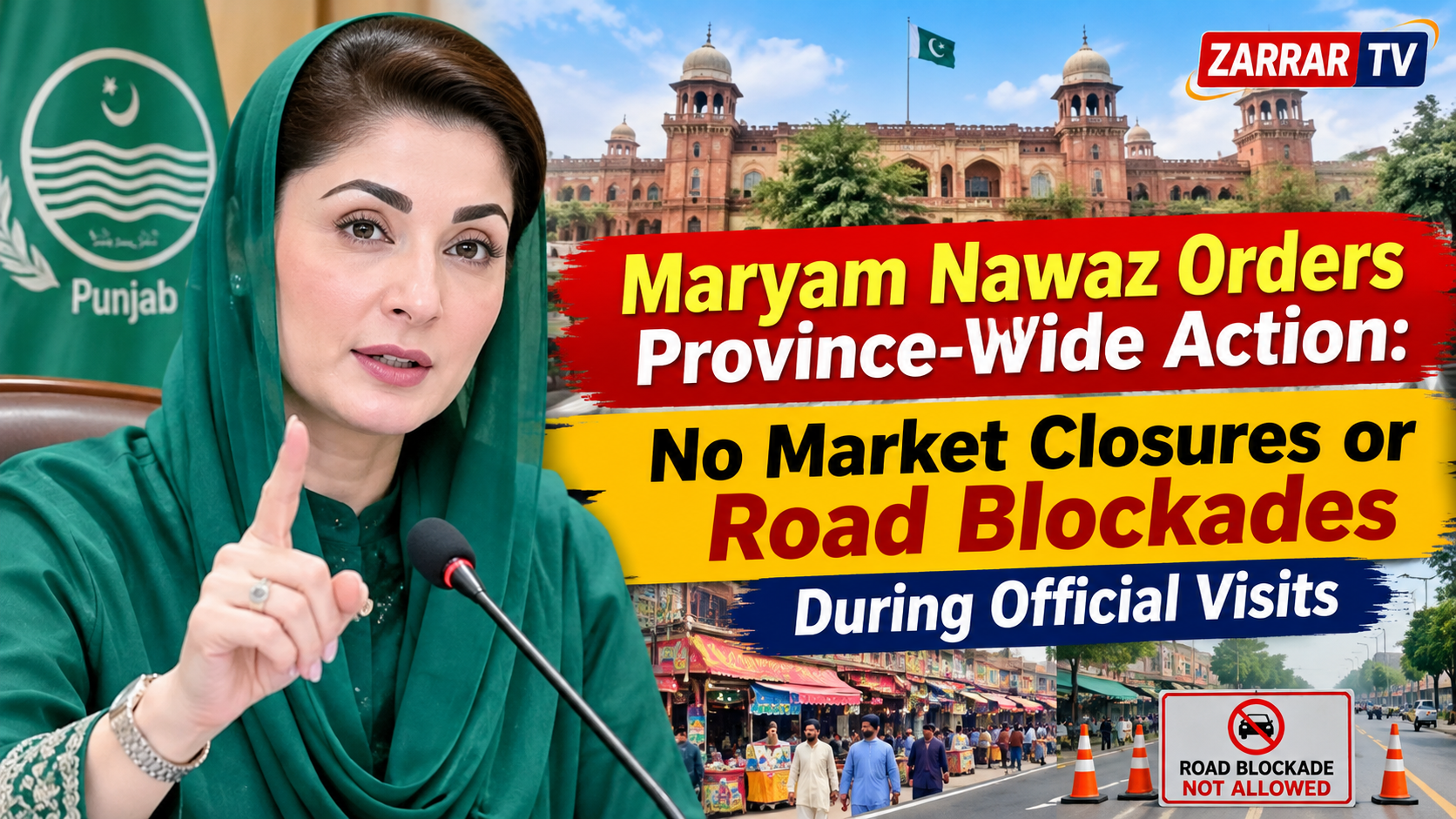
LAHORE, Pakistan — November 9, 2026 — Punjab Chief Minister Maryam Nawaz Sharif has issued fresh province-wide instructions directing police and administrative authorities to keep markets, shops and business establishments open during her official visits, while preventing unnecessary restrictions on residents’ movement in the name of security. The directive requires discreet security arrangements and warns of strict action against officials who fail to comply.
The instructions have been communicated to regional police officers (RPOs), district police officers (DPOs), commissioners and deputy commissioners across Punjab. The chief minister has made it clear that official engagements and security protocols must not interrupt commercial activities or create unnecessary difficulties for ordinary citizens.
According to the directive, no market, shop, business or other commercial establishment should be ordered to close or suspend operations because of the chief minister’s visit to any district.
Maryam Nawaz has also instructed authorities not to block or seal residential streets or impose restrictions on residents’ movement under the pretext of security arrangements.
Maryam Nawaz Calls for Discreet Security Arrangements
In a message posted on social media platform X on November 8, Maryam Nawaz reiterated that public convenience must remain a priority during official visits.
She directed the relevant departments to ensure that security measures are implemented professionally and discreetly, without creating unnecessary disruption to everyday life.
The chief minister stated that her instructions must be followed in letter and spirit, warning that officials responsible for violations would face strict action.
The directive places particular emphasis on ensuring that residents can move freely in their neighbourhoods and that traders can continue their commercial activities without interruption.
The Punjab government has communicated the instructions to senior administrative and police officials to ensure their implementation across the province.
Markets and Businesses to Remain Open
One of the key elements of the latest instructions concerns the protection of commercial activities during visits by senior government officials.
Market closures associated with VIP movements can affect shopkeepers, traders, customers and employees who depend on uninterrupted business operations.
Under Maryam Nawaz’s latest directions, authorities are not permitted to ask businesses to suspend their activities simply because the chief minister is visiting a particular area.
The instructions also cover shops, commercial centres and other business establishments.
For traders, the directive is significant because it reinforces the expectation that routine economic activity should continue even when senior government officials are present in a district.
However, the practical impact will depend on how effectively local administrations and police departments implement the instructions.
No Blocking of Residential Streets or Restrictions on Residents
The chief minister has separately instructed authorities not to seal residential streets or prevent residents from moving freely in their own neighbourhoods.
Security arrangements during high-profile visits can involve traffic management, controlled access and restrictions around designated locations. However, the latest instructions emphasize that such measures should not unnecessarily affect people who live or work in the surrounding areas.
Maryam Nawaz has directed the relevant authorities to ensure that security personnel perform their duties without causing inconvenience, disruption or hardship to the general public.
The instructions also underline the need for coordination between police, district administrations and other relevant departments.
Jhelum Deputy Commissioner’s Removal Adds Context to the Directive
The latest province-wide instructions come amid scrutiny of administrative arrangements for the chief minister’s scheduled visit to Jhelum and Pind Dadan Khan.
On November 8, Maryam Nawaz announced the removal of Jhelum Deputy Commissioner Mir Raza Ozgen after the postponement of intermediate computer science supplementary examination papers in the district ahead of her scheduled visit.
The examinations, originally scheduled for November 10, 2026, had been postponed to November 30 following a recommendation from the district administration.
According to reports, the deputy commissioner’s office cited the expected deployment of administrative and security personnel and concerns about ensuring the smooth conduct of examinations during the chief minister’s visit.
Maryam Nawaz expressed displeasure over the decision, saying that she had already instructed district administrations not to cause inconvenience or disruption to the public during her visits.
She subsequently ordered the deputy commissioner’s removal with immediate effect.
The chief minister also directed that the examinations be conducted according to their original schedule on November 10.
The development highlighted the importance of administrative planning and ensuring that official visits do not interfere with essential public services, particularly education.
Implications for Punjab’s Administration and Public
The latest instructions send a clear message to district administrations that public convenience must be considered when planning official visits.
For shopkeepers and business owners, keeping commercial establishments operational could help prevent avoidable interruptions to daily business activities.
For residents, the prohibition on blocking residential streets is intended to protect ordinary movement and reduce inconvenience associated with security arrangements.
The directive also places greater responsibility on police officers and district officials to coordinate security operations without unnecessarily disrupting public life.
Effective implementation will require local authorities to assess security requirements in advance, coordinate traffic management and ensure that restrictions are limited to what is genuinely necessary.
The instructions also raise expectations regarding accountability. The warning of strict action means that administrative and police officials will be expected to demonstrate compliance during future visits.
What Happens Next?
The implementation of the instructions will depend on regional and district authorities across Punjab.
RPOs, DPOs, commissioners and deputy commissioners have been directed to ensure that markets remain open, residential streets are not unnecessarily blocked and citizens’ movement is not restricted in the name of security.
The provincial administration will also need to ensure that security arrangements remain effective while allowing normal commercial, educational and residential activities to continue.
For now, Maryam Nawaz’s latest directive establishes a clear administrative expectation: official visits should not become a reason for unnecessary disruption to public life.
Whether the instructions lead to consistent changes in security and administrative practices across Punjab will become clearer during the chief minister’s upcoming district visits.
