

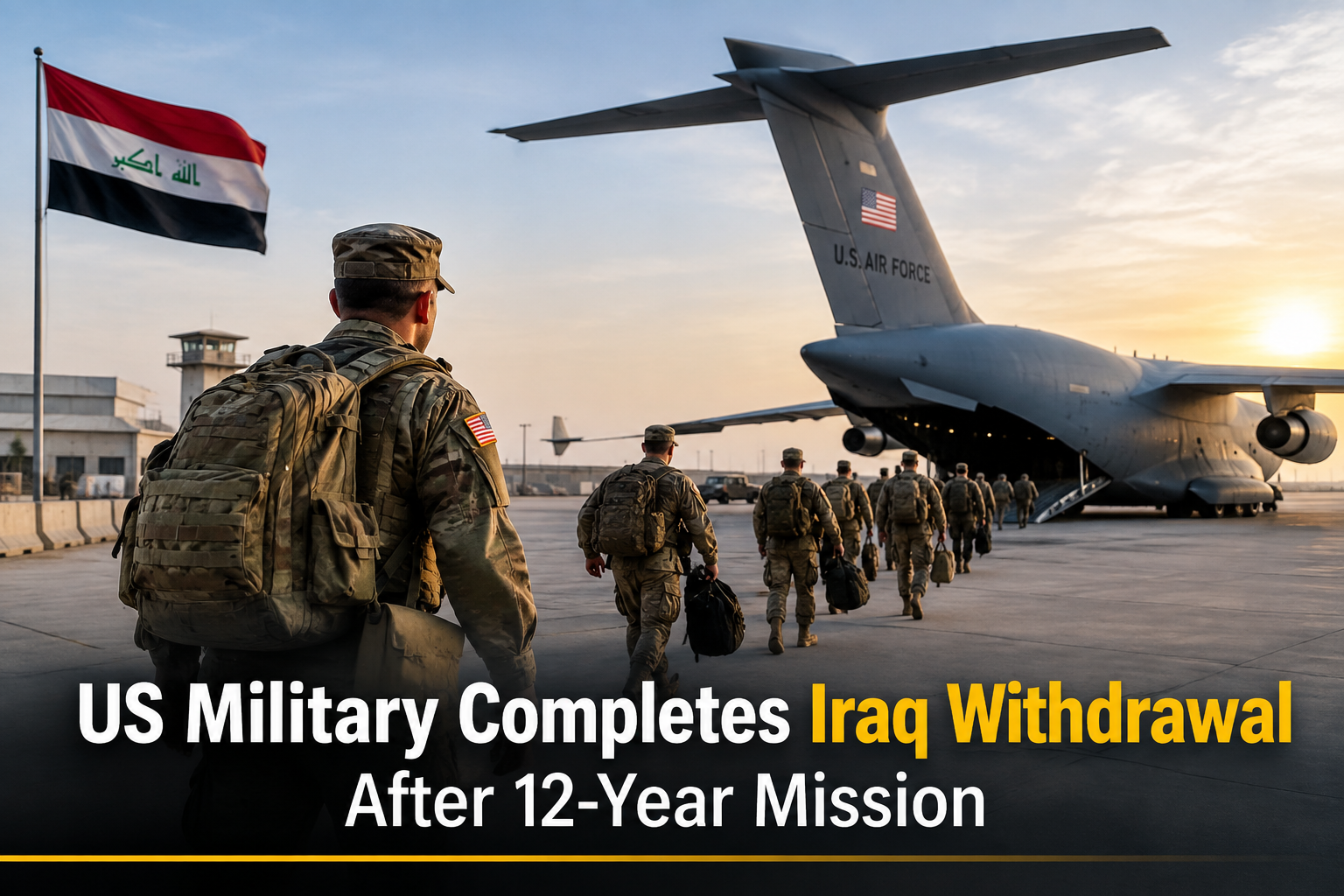
The United States has completed the withdrawal of its remaining troops and equipment from Iraq, formally ending a 12-year military mission against the Islamic State group. The final U.S. personnel departed Erbil Air Base in northern Iraq on September 30 under an agreement between Washington and Baghdad.
The withdrawal marks the end of Operation Inherent Resolve in Iraq, which began in 2014 after ISIS captured large areas of Iraq and Syria. U.S. and coalition forces provided military assistance, intelligence and support to Iraqi forces during the campaign.
Pentagon spokesperson Sean Parnell said the departure represented an “orderly” completion of the U.S. mission. U.S. Central Command said the transition reflects the move from a wartime coalition operation toward an Iraqi-led security effort and a bilateral defense relationship between the two countries.
Iraq Takes Greater Security Responsibility
Iraqi authorities have presented the withdrawal as an important step toward greater national sovereignty. Prime Minister Ali al-Zaidi said the completion of the coalition mission marks a new phase in which Iraqi institutions assume primary responsibility for the country’s security and stability.
The United States is expected to maintain security cooperation with Iraq through areas such as training and intelligence support, while U.S. forces continue counter-ISIS operations in Syria alongside regional partners.
The final withdrawal follows a 2024 agreement between Washington and Baghdad to wind down the U.S.-led military mission against ISIS. American forces had already left bases across much of federal Iraq, while a smaller contingent remained in the Kurdistan region until the final departure from Erbil.
Security Concerns Remain
Despite the end of the U.S. military mission, security challenges remain. ISIS no longer controls the territory it once held, but the group continues to operate through sleeper cells and remains a security concern in Iraq and Syria.
Officials in Iraq’s Kurdistan region have also raised concerns about the removal of U.S. air-defense capabilities. Kurdish authorities said the region had faced more than 1,000 drone and ballistic-missile attacks during the recent U.S.-Iran conflict.
The withdrawal also comes as Iran-aligned armed groups maintain significant influence inside Iraq. Reuters reported that some analysts believe the departure could alter the balance between Baghdad, Washington and Tehran. These assessments reflect expert analysis rather than a confirmed change in Iraq’s future political alignment.
What’s Next for US-Iraq Relations
The end of Operation Inherent Resolve in Iraq does not mean the end of U.S.-Iraqi relations. Washington and Baghdad are moving toward a more conventional bilateral defense relationship, with cooperation continuing in areas including training, intelligence and security.
The withdrawal closes a major chapter in the U.S. military campaign against ISIS while placing greater responsibility for Iraq’s security on Iraqi forces and institutions.
Produced by Mukarram Ahmed
